The Ultimate Showdown: Dji Avata 360 vs Garmin Forerunner 970 for 2026
As we navigate the middle of 2026, the landscape of personal technology has shifted from mere connectivity to immersive experience and biometric precision. Two devices have emerged as the pinnacle of their respective categories, despite serving vastly different primary functions. The Dji Avata 360 represents the peak of consumer drone technology, offering a complete spherical perspective that has revolutionized aerial cinematography. On the other hand, the Garmin Forerunner 970 has redefined what a wearable can be, moving beyond simple health tracking into the realm of predictive physiological coaching. While one dominates the skies and the other the wrist, consumers in 2026 are increasingly finding themselves choosing between these two "flagship" experiences when deciding where to invest their premium electronics budget. This detailed analysis explores how these two technological marvels compare in a year where data, vision, and performance are the primary currencies of the gadget enthusiast.
The Evolution of Vision: Dji Avata 360
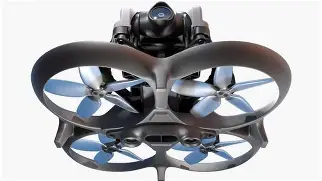
The Dji Avata 360 is not merely an iterative update; it is a fundamental reimagining of the First Person View (FPV) experience. In the preceding years, drone operators were confined to a fixed forward-facing field of view, requiring precise flight maneuvers to capture side-angle action or rear-view chases. The Avata 360 changes the paradigm by utilizing a dual-lens optical system that captures a seamless 8K spherical environment. For the user, this means that "framing the shot" happens during post-processing rather than in the air. You fly for safety and speed; the software handles the perspective.
What makes the 2026 model particularly special is the integration of the O5+ transmission system. In a world where 6G is becoming the standard, the Avata 360 utilizes ultra-wideband frequencies to provide a near-zero latency feed to the Goggles 4. This isn't just about pixels; it's about the vestibular harmony between what the pilot sees and what the pilot feels. The inclusion of AI-driven obstacle "ghosting" allows the drone to navigate through dense forest canopies at speeds exceeding 60 miles per hour, as the onboard processors predict the safest path three seconds before the drone reaches it.
For the modern content creator, the Avata 360 serves as a flying gimbal that removes the technical barrier to cinematic excellence. The "Stealth-Prop" design introduced this year has also significantly reduced the high-pitched whine associated with earlier FPV drones, making it a more viable tool for event videography and nature documentaries where noise pollution is a concern. It is a tool for those who want to see the world from a perspective once reserved for birds of prey.
The Pinnacle of Human Performance: Garmin Forerunner 970
While DJI looks outward, Garmin has spent 2026 looking inward. The Forerunner 970 is the most sophisticated physiological monitor ever released to the general public. It has transitioned from a "sports watch" to a "lifestyle optimizer." The primary breakthrough in the 970 series is the non-invasive glucose monitoring and lactate threshold tracking that operates in real-time without the need for skin-piercing sensors. This allows athletes and health-conscious individuals to understand exactly how their body is fueling its efforts second-by-second.
The display is another marvel of 2026 engineering. Garmin has moved to a "Micro-LED Hybrid" screen which maintains the incredible battery life of previous transflective displays while offering the vibrant color gamut and 3,000-nit brightness of a high-end smartphone. Whether in direct Sahara sunlight or the depths of a midnight trail run, the data is perfectly legible. Furthermore, the 970 utilizes a new sapphire-polymer composite for the casing, making it virtually indestructible while weighing 15% less than the 965 model.
The software side of the 970 features "Coach AI," a proprietary large language model localized on the device. It doesn't just tell you that your recovery is 12 hours; it analyzes your sleep architecture, your morning cortisol indicators (via skin chemistry), and your upcoming calendar to suggest the exact intensity of your next workout. In 2026, the Forerunner 970 isn't just tracking your life; it is actively managing your longevity.
Discover deals on Electronics — updated daily.
See Deals →Detailed Feature Analysis and Comparison
To understand which device fits into a 2026 lifestyle, we must look at the specific technical specifications and how they translate to real-world utility. While the DJI Avata 360 focuses on external environmental capture, the Garmin 970 focuses on internal biological data. However, both rely on the same pillars: battery efficiency, durable construction, and intelligent software.
| Feature | Dji Avata 360 | Garmin Forerunner 970 |
|---|---|---|
| Primary Sensor | Dual 1/1.3-inch CMOS (8K/60fps) | Gen-6 Elevate Optical / Bio-Z Sensor |
| Battery Life | 28 Minutes Per Flight | 25 Days (Smartwatch) / 80 Hours (GPS) |
| Connectivity | O5+ Ultra-Wideband / Wi-Fi 7 | Multi-Band GNSS / Sat-Comm / 6G |
| Durability | Cine-Shield 2.0 Bumper Guard | 10 ATM / Titanium-Sapphire Build |
| Core Intelligence | Vision-Track 4.0 Obstacle Avoidance | On-Device Coach AI LLM |
| Weight | 410g (including battery) | 48g (without strap) |
Pros and Cons: Evaluating the User Experience
Every piece of high-end electronics involves trade-offs. In 2026, these trade-offs are often between power and portability, or between automation and manual control. Here is a breakdown of what users love and what they tolerate about these flagship devices.
Dji Avata 360
- Pro: The 360-degree capture eliminates the need for a separate camera operator, allowing solo pilots to create complex orbiting shots with ease.
- Pro: Modular design allows for quick swapping of camera lenses and battery packs, extending the life of the airframe.
- Pro: Enhanced "Emergency Brake and Hover" feature is now localized on the drone's processor, preventing crashes even if the signal is completely lost.
- Con: The cost of the complete ecosystem—including goggles and remote—remains a significant barrier for entry-level enthusiasts.
- Con: Increased regulatory requirements for 360-degree drones due to their high-altitude stability and surveillance capabilities.
Garmin Forerunner 970
- Pro: Non-invasive metabolic tracking provides a massive advantage for endurance athletes who previously relied on blood-prick tests.
- Pro: Solar charging efficiency has improved by 40%, meaning that in summer months, the watch effectively never needs to be plugged in.
- Pro: The "Safety-Map" feature uses satellite communication to provide emergency assistance and guided navigation even in areas with zero cellular coverage.
- Con: The sheer volume of data can be overwhelming for casual users who may suffer from "app-fatigue."
- Con: The premium sapphire-polymer materials make the device significantly more expensive than mid-range fitness trackers.
Real-World Use Cases: Where These Devices Shine
To truly understand the "Showdown" of 2026, we have to look at how these devices function in the hands of the people they were designed for. It is not just about the numbers on a spec sheet, but about the moments they enable.

The Adventure Content Creator
Imagine a mountain biker descending a ridge in the Swiss Alps. In 2024, they would have needed a chest-mounted camera or a drone following them that might miss a sharp turn. With the Dji Avata 360, the drone flies twenty feet above and behind, capturing everything. Because it records in a 360-degree sphere, the biker can later produce a video where the "camera" pans from the trail ahead to their face, then to the valley below, all from a single flight. The Avata 360’s ability to remain stable in high-altitude winds makes it the ultimate companion for the extreme outdoorsman who wants to document their journey without stopping to adjust settings.
The Data-Driven Marathoner
Contrast this with a runner training for the Tokyo Marathon. Every morning, they check their Garmin Forerunner 970. The watch informs them that their glycogen stores are at 85% because they stayed up an hour late, and their resting heart rate is slightly elevated, suggesting an oncoming cold. During the actual race, the watch doesn't just show pace; it monitors their sweat loss and sodium concentration, vibrating to tell them exactly when to take a hydration gel. This is the 2026 standard for performance: the watch is a proactive partner in the athlete’s success, rather than a passive observer.
Buying Guide: Making the Right Choice for 2026
Choosing between an elite drone and an elite wearable may seem like comparing apples to oranges, but for the lifestyle-focused consumer, it often comes down to where you spend your time. If you are someone who values creation and external exploration, the DJI Avata 360 is the clear winner. It is a device that expands your reach and allows you to share your vision with the world in a way that was previously only possible for Hollywood film crews.
Looking for the best Electronics deals on Amazon?
See Deals →If you are someone who values optimization and internal self-mastery, the Garmin Forerunner 970 is the essential tool. It is designed for the individual who views their body as a high-performance machine that requires precise tuning and data-driven insights. In 2026, the 970 is more than a watch; it is a health insurance policy and a private coach rolled into one.
Consider the following factors before you commit:
- Environment: Do you live in a city with strict "No-Fly Zones"? The Dji Avata 360 may be limited by local laws, whereas the Garmin Forerunner 970 is useful in every square inch of the planet.
- Social Aspect: Do you enjoy sharing your experiences visually? The Avata 360 is built for social impact. Do you enjoy the personal satisfaction of a new "Personal Record"? The Garmin 970 is built for individual achievement.
- Longevity: Drone technology moves fast, and new models are frequent. Garmin’s Forerunner series tends to be supported with software updates for many years, making it a potentially longer-lasting investment for your daily routine.
The Future of Integrated Tech
What we see in this showdown is a convergence of artificial intelligence and hardware. Both DJI and Garmin have realized that "specs" are no longer the primary selling point. Instead, it is the intelligence of the device. The Avata 360 uses AI to make flying invisible, and the Forerunner 970 uses AI to make health data actionable. As we look toward the latter half of the decade, the distinction between "electronics" and "personal assistants" continues to blur.
In 2026, the Dji Avata 360 represents the freedom of movement, while the Garmin Forerunner 970 represents the freedom of health. For many enthusiasts, the dream is not to choose one, but to use both: flying the Avata 360 to capture the beauty of a mountain summit that the Forerunner 970 helped them reach by managing their training and stamina. These two devices aren't just tools; they are force multipliers for human potential.
Conclusion
The Dji Avata 360 and the Garmin Forerunner 970 are the standard-bearers for their respective industries as we settle into 2026. One has mastered the art of seeing the world; the other has mastered the art of understanding the human body. In the ultimate showdown, there is no single winner—only the user who finds the right tool for their specific passion. Whether you are soaring through the clouds or sprinting through the streets, the technology of today has finally caught up to the imagination of yesterday. Choose based on your goals, invest in the data that matters most to you, and embrace the unprecedented capabilities that these two flagship devices bring to the table.