Biggest Hyperkin The Competitor Buying Mistakes (And How to Avoid Them)
For enthusiasts of retro gaming and fighting games, the quest for the perfect controller is a never-ending journey. Among the diverse landscape of third-party peripherals, the Hyperkin "The Competitor" stands out as a unique tribute to a specific era of hexagonal-gated precision. Designed to bridge the gap between modern convenience and nostalgic ergonomics, this controller has garnered significant attention from the Super Smash Bros. community and general retro gamers alike. However, high-performance peripherals often come with specific expectations, and many consumers find themselves underwhelmed not because of the product’s quality, but because of avoidable purchasing errors. Understanding the nuances of "The Competitor" is essential for any buyer looking to enhance their setup without falling into common traps.
Selecting a controller like "The Competitor" requires a mindset shift from the standard plug-and-play attitude. Unlike a generic modern game pad, this device is built with a specific philosophy regarding stick tension, button layout, and tactile feedback. When buyers treat it like a standard disposable accessory, they often overlook the technical requirements and ergonomic adjustments needed to truly master the hardware. By identifying these pitfalls early, users can ensure that their investment in Hyperkin hardware results in improved frame data and a more comfortable gaming experience rather than a dusty paperweight on a shelf.
Analysis of Hyperkin The Competitor
Hyperkin’s "The Competitor" is fundamentally an evolution of the classic controller design that dominated the early 2000s. Its most striking feature is the inclusion of the hexagonal gate surrounding the analog sticks, a design choice that is polarizing in the modern era of smooth, circular joystick modules. This gate is not merely aesthetic; it provides physical feedback for the eight cardinal and ordinal directions, which is critical for executing precise directional inputs in fighters or platformers where a missed degree of tilt can result in a lost match.
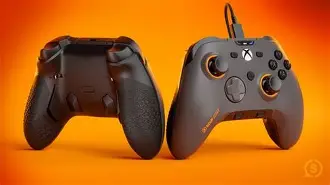
The build quality reflects Hyperkin's approach to "pro-sumer" gear. The plastic casing is dense and textured, providing a grip that resists the slickness often caused by long, sweaty play sessions. Internally, the triggers and face buttons are tuned for a shorter travel distance than many stock controllers. This "hair-trigger" feel is intended to reduce mechanical lag, allowing the player's intentions to be registered by the console with minimal physical resistance. However, this level of sensitivity can be a double-edged sword for those used to the mushier, more forgiving membrane buttons of standard consumer-grade controllers. It requires a lighter touch and a more deliberate style of play.
Compatibility is another pillar of this device. While it draws inspiration from the past, it is equipped with modern connectivity, often featuring USB outputs that allow it to interface with a variety of modern consoles and PC setups. This versatility is one of its strongest selling points, yet it is also where many buyers make their first mistake. Assuming universal compatibility without checking the specific firmware requirements or driver support for certain operating systems can lead to frustration right out of the box.
Common Buying Mistakes
One of the most prevalent mistakes is failing to account for the "break-in" period. Many users unbox "The Competitor" and immediately jump into a high-stakes competitive match. Because the springs in the analog sticks and the membranes under the buttons are factory-new, they can feel stiff or unresponsive for the first few hours of use. This often leads to premature returns or negative reviews claiming the controller is "clunky." Real-world use suggests that at least five to ten hours of casual play are required to soften the mechanical components to their intended operational state.
Another error involves ignoring the specific ergonomic profile. "The Competitor" is designed for gamers who use a "claw" or "standard" grip with a focus on thumb-stick precision. Users with exceptionally large hands or those who prefer the offset stick layout of modern Western consoles may find the layout cramped. Buying the controller based on its reputation for precision without considering how it fits in one's own hands is a recipe for carpal discomfort. It is vital to compare the dimensions of your current favorite controller with the specifications of the Hyperkin model to ensure a seamless transition.
Pros and Cons of Hyperkin The Competitor
- Pro: Precision Hexagonal Gates - The physical notches allow for flawless directional accuracy, which is a massive advantage in games requiring specific angle inputs like Super Smash Bros. Melee or Ultimate.
- Pro: Multi-Platform Versatility - Most iterations of this controller work across multiple generations of hardware, making it a cost-effective solution for gamers with diverse collections.
- Pro: Tactical Button Feedback - The clicky, responsive feel of the face buttons provides clear auditory and tactile confirmation that an action has been registered.
- Pro: Durable Long-Format Cable - Unlike many wireless options that suffer from interference or battery degradation, the high-quality wired connection ensures zero latency and a long lifespan.
- Con: Initial Rigidity - The stiff out-of-the-box feel can be off-putting for players who expect an immediate "soft" touch.
- Con: Learning Curve - Transitioning from a circular gate to a hexagonal gate requires muscle memory adjustment, which may temporarily lower a player's performance.
- Con: Aesthetic Subjectivity - The retro-inspired design may not appeal to those who prefer the sleek, minimalist look of contemporary First-Party controllers.
Performance Comparison
To understand where "The Competitor" sits in the market, it is helpful to look at how it measures up against standard stock controllers and high-end boutique modifications. The following table highlights the key technical differences that impact competitive play.
Discover deals on Electronics — updated daily.
Browse Now →| Feature | Standard First-Party Controller | Hyperkin The Competitor | Custom Boutique Modded Pad |
|---|---|---|---|
| Gate Style | Circular (Smooth) | Hexagonal (Notched) | Hybrid / Custom Notched |
| Input Latency | Moderate (Wireless/Wired) | Ultra-Low (Direct Wired) | Varies by Circuit Board |
| Trigger Type | Analog (Long Travel) | Tactile (Short/Mid Travel) | Digital Click (Instant) |
| Durability | High (General Use) | High (Competitive Use) | Varies (Component Dependent) |
| Price Point | Standard Retail | Mid-Range / Budget Pro | Premium / High-End |
Comprehensive Buying Guide
When you are ready to purchase "The Competitor," the first step is to verify the revision model. Hyperkin often iterates on their hardware, and later production runs frequently address minor issues found in early batches, such as stick drift or cable shielding. Look for retailers that specify the batch or version number. Always prioritize versions that mention reinforced stick boxes, as these are the components most likely to fail under the stress of intense gaming.
The second consideration in your buying guide should be your "Primary Use Case." If you are a casual gamer who plays RPGs or slow-paced adventures, the benefits of the hexagonal gate might be outweighed by the comfort of a standard circular stick. Conversely, if you are practicing "Waveshining" or complex platforming sequences, the notched gate becomes an essential tool. Be honest about your gaming habits; do not buy a "pro" tool if you don't intend to use the specific features that make it professional.
Thirdly, consider your setup's physical constraints. "The Competitor" is almost exclusively a wired device to preserve input integrity. Many buyers forget to measure the distance from their couch to their console. While the cable is generous, a tensioned cable can lead to accidental port damage or the controller being pulled out of your hands. If you play in a large living room, you might need to purchase a high-quality extension cable alongside the controller itself.
Avoiding Technical Mismatch
Technical mismatch occurs when a buyer assumes the controller will "fix" their gameplay issues without understanding the underlying mechanics. For example, if you suffer from network lag in online matches, a wired controller like "The Competitor" will reduce your input latency at the source, but it cannot resolve a poor internet connection. Buyers often blame the hardware for not providing a "magic fix" to their win-loss ratio. The correct approach is to view this controller as a way to remove the ceiling imposed by inferior hardware, allowing your actual skill level to shine through.
Additionally, pay attention to the "Stick Tension" ratings. Some versions of "The Competitor" are modeled after the tighter sticks of the early 2000s, while others are looser to mimic modern controllers. Searching for user reviews that specifically mention "grams of force" or comparing the feel to a well-known benchmark can save you from a purchase that feels fundamentally "wrong" to your thumb muscles. Every gamer has a preference between "snappy" and "fluid" stick movement; ensure the model you choose aligns with yours.
Ergonomics and Long-Term Health
A frequently overlooked buying mistake is the failure to consider hand health. Competitive gaming involves thousands of repetitive motions per hour. "The Competitor" offers great precision, but its smaller form factor compared to some modern behemoths means that players with larger hands might experience cramping if they don't take regular breaks. When buying, look for descriptions of the "palm swell." A deeper palm swell helps distribute the pressure across the hand, whereas a flatter back requires more grip strength to stay stable during fast inputs.
Buyers should also investigate the material of the thumb-stick caps. Hyperkin uses a durable rubberized compound, but it is much firmer than the soft silicone found on some controllers. If you have sensitive skin or find yourself developing blisters during long sessions, you may want to budget for a set of slip-on stick grips. Avoiding the "blister mistake" ensures that you can actually use the controller you just bought for more than an hour at a time.
Advanced User Considerations
For those who are deep into the technical side of gaming, there are even more granular details to consider. One such detail is the "Polling Rate." While most USB controllers poll at a standard rate, some enthusiast-grade Hyperkin products allow for overclocking via third-party software on PC. If you are a PC gamer, check if "The Competitor" is compatible with standard polling rate overclockers. This can further reduce input lag from 8ms down to 1ms, providing a level of responsiveness that is virtually indistinguishable from a direct hardware interrupt.
Looking for the best Electronics deals on Amazon?
View Offers →Furthermore, consider the "Snapback" phenomenon. When you flick an analog stick and let it go, it can sometimes oscillate past the center point, causing an accidental input in the opposite direction. High-quality controllers like "The Competitor" are designed to minimize this, but it is not always zero. Serious competitive buyers should look for demonstrations or reviews that specifically test for snapback in the neutral zone. This is the difference between a successful "neutral-B" and an accidental "side-B" in a high-pressure situation.
Maintenance and Longevity
Buying a controller is an investment, and the biggest mistake after the purchase is poor maintenance. Because "The Competitor" uses mechanical gates, dust and skin oils can accumulate in the notches, leading to a "gritty" feel over time. Buyers should prepare by having a simple cleaning kit—isopropyl alcohol and cotton swabs—to keep the gates clear. Neglecting this maintenance leads to the perception that the controller has "worn out" when it actually just needs a simple cleaning. Avoiding the mistake of "maintenance neglect" can double the effective lifespan of the device.
Also, consider the cable management. The point where the cable meets the controller body is a common failure point in all wired peripherals. When buying, notice if the model has a reinforced "strain relief" boot. If it doesn't, or if you tend to wrap your cables tightly when storing them, you are inviting internal wire fractures. Learning to loop the cable loosely (the "over-under" method used by audio engineers) is a pro tip that prevents the "dead controller" syndrome that plagues many second-hand units.
Final Assessment of Potential Buyers
Ultimately, the Hyperkin "The Competitor" is a specialized tool. It is not necessarily for the person who occasionally plays a game of Mario Kart with friends. It is for the player who wants to feel every degree of movement, who wants a trigger that responds the instant it is pressed, and who values the tactile heritage of gaming history. The buyers who are happiest with this product are those who have done their homework—those who know their hand size, their preferred stick tension, and the technical requirements of their favorite games.
By avoiding the mistakes of ignoring the break-in period, disregarding ergonomic fit, and skipping over technical specs like polling rates and gate geometry, you position yourself to get the most out of what Hyperkin has built. This controller is a bridge between the precision of the past and the technology of the present. When used correctly and purchased with a clear understanding of its design intent, it provides a significant edge in any competitive environment. It turns the struggle against your hardware into a synergy with your hardware, allowing your focus to remain where it should be: on the game and the opponent in front of you.
In the world of electronics, there is often a rush to find the "best" product. In reality, the "best" product is the one that fits the individual user’s needs and physiological requirements. "The Competitor" is an excellent candidate for the title of best retro-style competitive controller, but only for the buyer who approaches the purchase with a critical eye and a well-informed plan. Take the time to measure, compare, and research. Your hands, your performance, and your wallet will thank you for the extra effort in avoiding these common buying mistakes.